
The Reflection in the Tarn
The Fall of the House of UsherThe tarn first serves as a mirror that magnifies dread and finally receives the shattered mansion, linking perception to physical erasure.
increasing Bearing strength in each event
 decreasing
Bearing strength in each eventdecreasingThe Water Beside the House
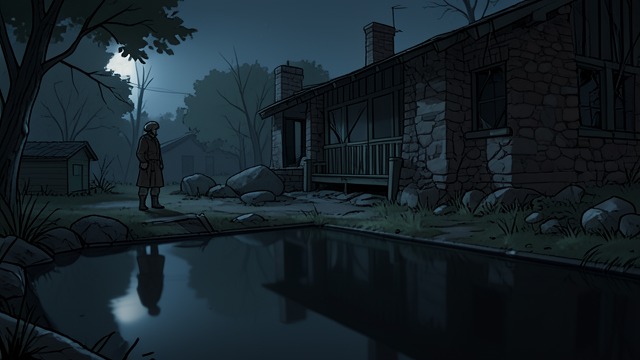
A Still Surface
The estate’s double
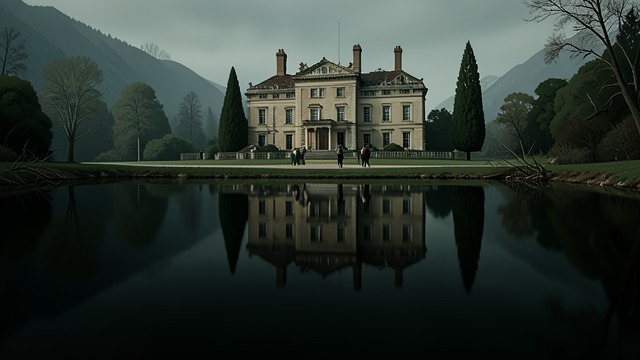
The tarn lies beside the mansion, dark and unruffled. Its proximity makes the landscape seem to repeat the building rather than merely surround it.
An uneasy feature
The narrator initially observes it as part of the bleak setting. Its reflective surface will become a device through which he tests and intensifies his impressions.
The Inverted Image
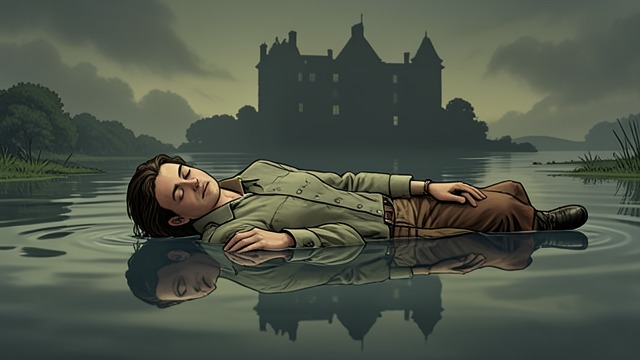
Looking Downward
A deliberate experiment
The narrator studies the mansion and trees reflected in the water, hoping a changed arrangement may alter his reaction. Instead, the inverted image provokes a stronger shudder.
Perception deepened
The reflection does not correct his fear with distance or perspective. It doubles the visual scene and makes the estate feel harder to escape.
A Mirror in Roderick’s Theory
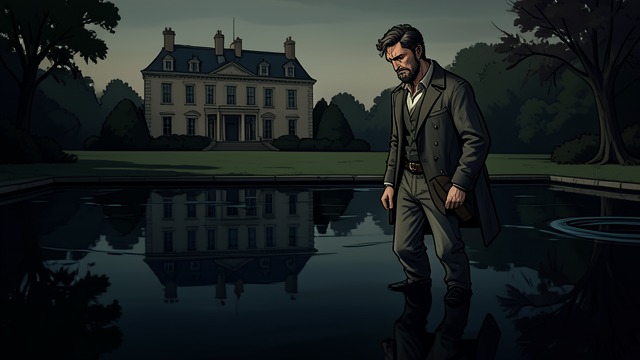
A Repeated Arrangement
Water as evidence
Roderick includes the tarn’s still reflection among the conditions that, he believes, give the house sentience. Its repetition of the building supports his image of a living system.
Unsettled interpretation
The narrator does not accept the theory, but the water’s visual doubling makes it difficult to dismiss. The tarn becomes part of the debate between material cause and supernatural influence.
The House Splits
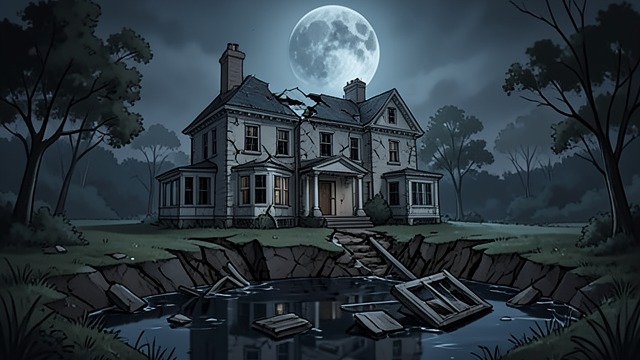
A Rupture Reflected in Place
The crack opens
After the twins’ deaths, the narrator sees the fissure widen through the moonlit mansion. The building divides above the same waters that had earlier held its image.
A transformed reflection
The tarn is no longer merely a mirror for an intact estate. It becomes the destination of the fragments as the structure loses its shape.
Water over Fragments
The Reflection Ends
Final disappearance
The tarn closes over the fragments of the mansion, erasing the building from view. The still water that once doubled the house now conceals its remains.
A closed image
The narrative ends with the estate absorbed into the landscape. The visual motif of reflection resolves as disappearance rather than recovery or explanation.
At the narrator’s first approach
Before the narrator reaches the house
During Roderick’s account of the house’s influence
At the end of the final storm
Immediately after the mansion’s collapse
